🧑💻 Developer-First #167 - Profitability may become the new normal for French startups
A shift in mindset is reshaping the balance between growth and returns.

Hello friend,
According to the 2025 France Digitale x EY barometer, a striking 80% of French startups are already profitable or expect to be within three years.
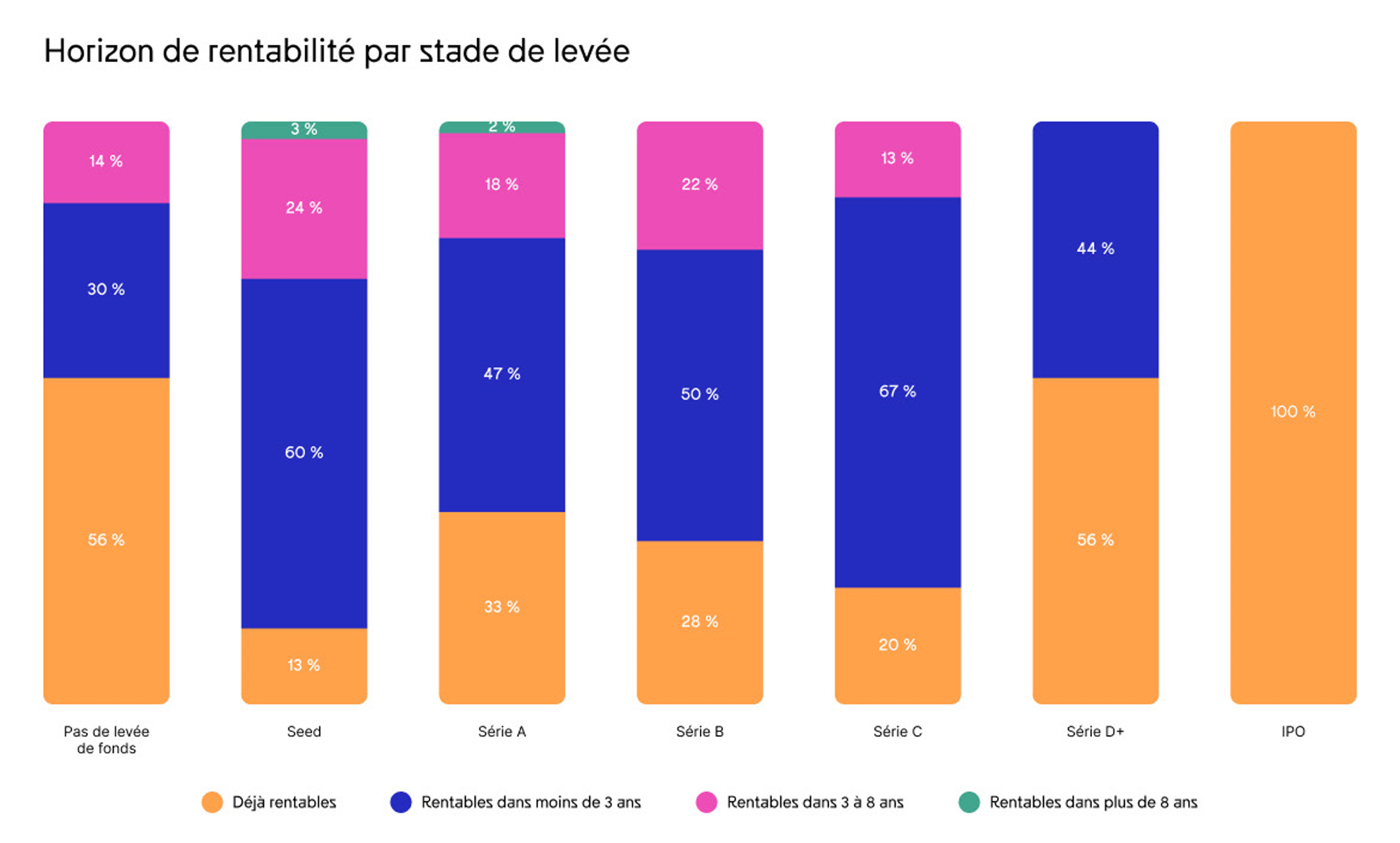
The numbers highlight just how much the mindset has shifted:
At seed stage, 13% are already profitable, and 60% expect to reach it in the near term.
By Series C, 67% forecast profitability within three years.
Even at Series D+, more than half are already in the black.
This pivot is largely explained by the financing environment. With venture funding in France dropping 35% in value and 24% in volume in H1 2025 vs H1 2024, founders are now focusing on controlling their own destiny rather than relying solely on external capital.
For the tech ecosystem, this is undeniably good news: stronger, more resilient companies, creating more sustainable value. But it also raises a tough question: what happens to the venture capital model when hyper-growth is no longer the norm? Without the outsized returns that come from explosive growth, raising the next fund becomes far more challenging.
It may be time to write a new playbook.
For startups: the challenge is to reconcile strong growth with profitability.
For VCs: the challenge is to invent new paths to DPI, without falling into the trap of inflated valuations.
The next generation of European champions will not just be fast-growing — they will be built on solid foundations, delivering sustainable value for both founders and shareholders.
Deal of the week - Mistral AI 🇫🇷 raises €1.7 billion, led by ASML 🇳🇱

The AI race just hit a new milestone with a pure European play: ASML invested €1.3 billion out of Mistral AI’s €1.7 billion Series C, taking an ~11% stake and a seat on the strategic committee. The round values Mistral at €11.7 billion.
For ASML, the deal is more than financial. It positions the chipmaking giant at the intersection of semiconductors and AI, with potential synergies in R&D and influence over how models evolve. It’s also framed as a sovereignty play — strengthening Europe’s bid for independence in strategic tech. This is one of the boldest bets yet on Europe’s AI future. While it may seem unusual for an industrial company to lead such a massive round, it follows a clear pattern: foundation model leaders like OpenAI and Anthropic also secured billions from strategic industry partners.
Read more about this deal here. Also, you’ll find all the other funding rounds and acquisitions from last week in The Changelog at the end of this newsletter.
Market pulse - Oracle’s best day in three decades
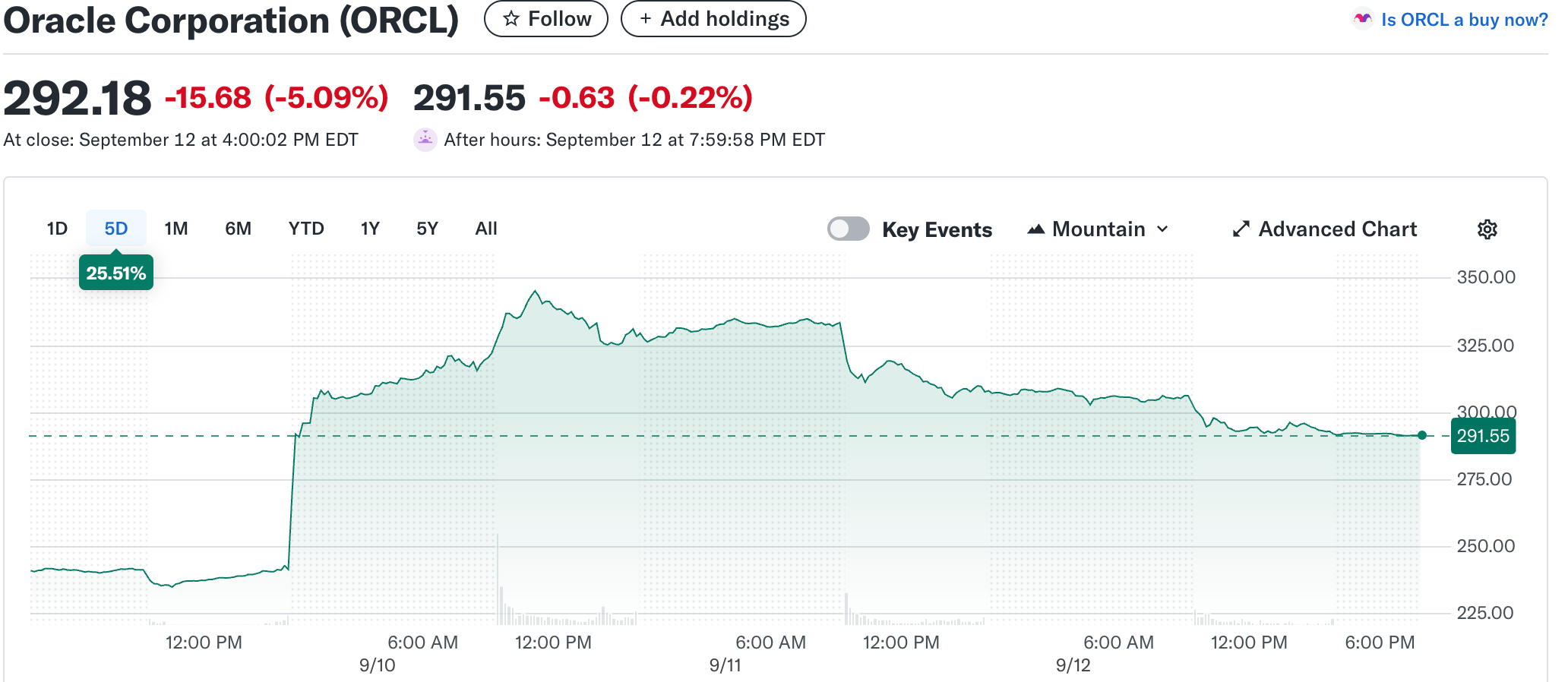
Oracle just delivered its best trading day since 1992, with shares soaring 35.9% and pushing its market cap close to $1 trillion. The surge came after a blowout forecast tied to AI demand: a $455B backlog in cloud contracts (+359% YoY), projected $18B cloud revenue for fiscal 2026 (+77% YoY), and an eye-popping target of $114B by 2029. Fuelling the frenzy, the Wall Street Journal reported Oracle signed a $300B data center deal with OpenAI, equivalent to 4.5 gigawatts of capacity.
But not everyone rushed to buy Oracle’s stock. Some skeptics say that OpenAI doesn’t have $300B in cash or revenues, Oracle lacks the chips to deliver such capacity, and profitability timelines remain distant. For now, the rally reflects AI euphoria more than fundamentals.
Signal vs Noise - Open-Source Robotics
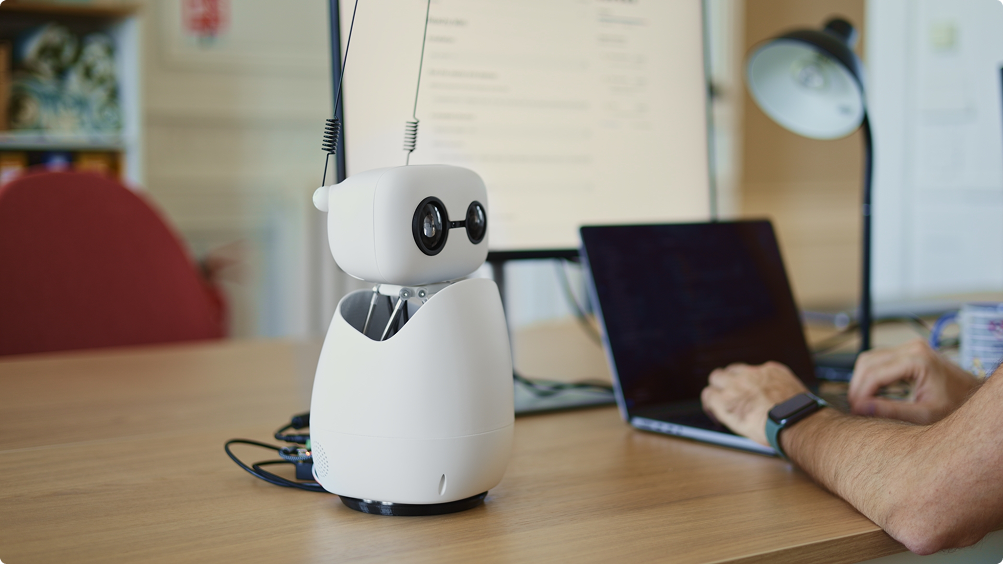
Open-source is starting to reshape the robotics landscape. Last week, X Square Robot 🇨🇳 raised $140M Series A to build general-purpose robots on top of an embodied foundation model — with the notable twist that its model is open-source. At the same time, the XLeRobot repo was one of GitHub’s most trending projects, signalling developer appetite for open frameworks in robotics.
This follows Hugging Face’s release a couple of months ago of Mini, a $299 expressive robot built for experimentation and education, fully programmable in Python (and soon JavaScript, Scratch). The momentum is clear: from venture-backed giants to low-cost kits, open-source robotics is moving from research labs into mainstream developer culture — but whether it scales beyond experimentation into mass adoption remains the open question.
What do you think of the new format?
Thanks for reading this newsletter! As you’ve noticed, I made some changes on this newsletter format to focus even more on analysis vs plain reporting. But, I need your feedback to make it even better.
The Changelog - Week of September 8th, 2025
Last week, 16 companies raised $2.99 billion across 9 product categories in 8 countries. Europe-based companies attracted 70% of the total funding vs 23% for North America-based companies and 7% for Asia-based companies (incl. Israel). Three companies distribute or contribute to an open-source project. On the M&A side, 3 companies were acquired.
Funding Rounds
Mistral AI, from Paris 🇫🇷 raised $2 billion in Series C funding led by ASML. Mistral develops fast, open-source, and secure language models. (more)
Cognition, from New York 🇺🇸 raised $400 million in Late VC funding led by Founders Fund. Cognition is the maker of Devin, the first AI software engineer, building collaborative AI teammates for engineering teams. (more)
Replit, from San Francisco 🇺🇸 raised $250 million in Late VC funding led by Prysm Capital. Replit enables developers to collaboratively build software from anywhere, without setup. (more)
X Square Robot, from Ningbo 🇨🇳 raised $140 million in Series A funding led by Alibaba’s CAS Investment Management. X Square Robot develops large manipulation model-based artificial general robots. (more)
DataCrunch, from Helsinki 🇫🇮 raised $64 million in Series A funding led by byFounders, Skaala, Varma Mutual Pension Insurance Company and Tesi. DataCrunch provides cloud infrastructure optimised for machine learning workloads. (more)
Koi, from Tel Aviv 🇮🇱 raised $38 million in Series A funding led by Battery Ventures, Team8, Picture Capital and NFX. Koi gives enterprises visibility and control over software extensions, packages, apps, and AI models. (more)
Spiral, from New York 🇺🇸 raised $22 million in Series A funding led by Amplify Partners and General Catalyst. Spiral builds data infrastructure for managing and processing multimodal data in Python. (more)
Clockwork Systems, from Palo Alto 🇺🇸 raised $20.5 million in Series B funding led by New Enterprise Associates. Clockwork provides a software-driven fabric to maximise GPU utilisation and accelerate AI workloads. (more)
Runware, from London 🇬🇧 raised $13 million in Series A funding led by Insight Partners. Runware delivers ultra-fast, low-cost generative media through proprietary hardware and accelerated software. (more)
Nuance Labs, from Seattle 🇺🇸 raised $10 million in Seed funding led by Accel. Nuance Labs is building a real-time human foundation model with social and emotional intelligence. (more)
Dazl, from Tel Aviv 🇮🇱 raised $10 million in Seed funding led by the 40RTY Fund. Dazl provides AI-powered tools for the creation of projects without code. (more)
Altan, from Barcelona 🇪🇸 raised $2.5 million in Pre-Seed funding led by VentureFriends and JME Ventures. Altan uses AI agents to turn ideas into fully functional products and run them. (more)
Podonos, from Los Gatos 🇺🇸 raised $2.4 million in Pre-Seed funding led by Serac Ventures. Podonos provides streamlined evaluation tools for Voice AI models. (more)
LocusX, from Montreal 🇨🇦 raised $2.2 million in Seed funding led by Diagram Ventures and Triptyq Capital. LocusX accelerates game development by reducing debugging time with AI. (more)
Aurva, from Sunnyvale 🇺🇸 raised $2.2 million in Seed funding led by Nexus Venture Partners. Aurva builds runtime visibility and enforcement for sensitive data accessed by LLMs, copilots, and AI agents. (more)
M&A Transactions
SingleStore, from San Francisco 🇺🇸 was acquired by Vector Capital for $500 million. SingleStore provides a real-time database that supports both transactional and analytical workloads. (more)
CalypsoAI, from New York 🇺🇸 was acquired by F5 for $180 million. CalypsoAI is an adaptive AI security platform that helps enterprises innovate safely while staying ahead of threats. (more)
FinetuneDB, from Stockholm 🇸🇪 was acquired by Opper AI. FinetuneDB provides an end-to-end platform for dataset creation, fine-tuning, and serving LLMs. (more)