🧑💻 Developer-First #181 - Ten predictions for 2026
10 predictions on AI, code economics, developer power, and the future of engineering in 2026
Hello friend,
Happy New Year 🥳 I hope 2026 starts with health, energy, and curiosity for what’s ahead. While most people took some time off with loved ones (including myself), the world of tech didn’t stop: Lovable $330 million series B, Manus’ $2B+ acquisition by Meta, Yann LeCun leaving Meta to start his own AI company in Paris... It just hasn’t stopped.
Looking at the past year, there clearly has never been a more exciting time to work in software engineering. We’re watching the foundations of how software is built, shipped, and maintained, shift in real time. At the same time, it’s hard to ignore that we’re also in a period of intense, and sometimes unsettling, change: AI everywhere, evolving roles, new expectations for teams, and constant pressure on systems that were never designed for this pace.
For this special New Year edition, I’m sharing below my 10 predictions for 2026 to help make sense of where software, infrastructure, and engineering organisations may be heading next. Treat them with doubt and don’t hesitate to challenge 😉
On a more personal note, I recently transitioned into a Senior Advisor role at Avolta, where I had been working for the past two years, and started focusing on a new venture (still in stealth mode) to rethink the software outsourcing model in an AI-native world. I’ve been sharing the early thinking and first steps of this new journey with a small circle of friends and advisors in a separate newsletter. Let me know if you’d like to be looped in.
Now, let’s dive into the predictions.
P.S. I’ll also keep investing time and energy into growing the Unicorn CTO community and podcast (with a new episode dropping this Wednesday). Get in touch if you’re interested in joining the community!
1 — Software orgs will keep shrinking, and not for the reasons we pretend
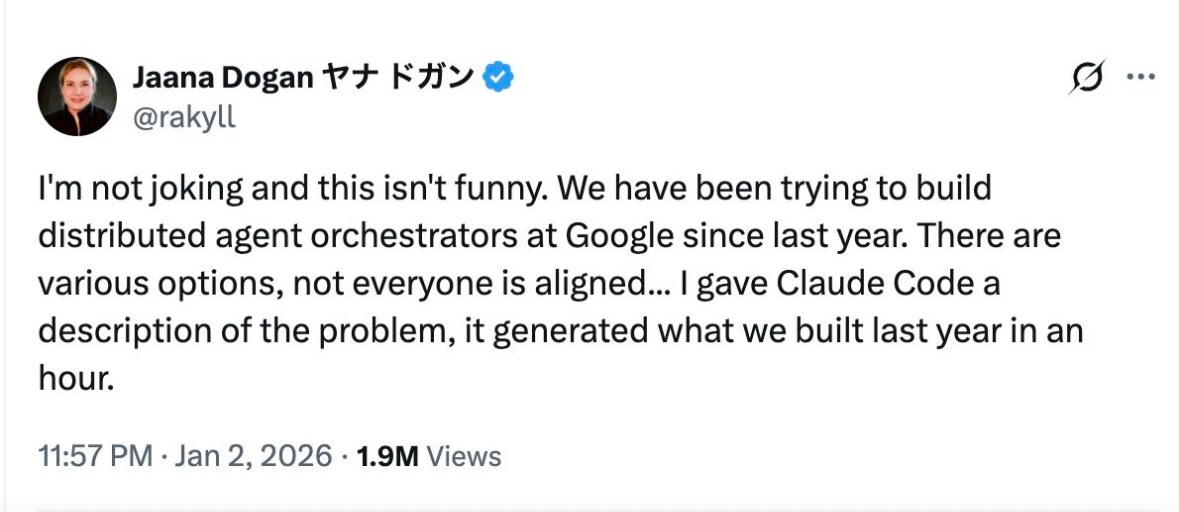
In 2026, large tech companies will continue to lay off engineers, not because they “overhired” in 2021, and not because demand for software is slowing, but because AI is now visibly replacing entire layers of software work. Junior developers will be hit first as the “learning-by-doing” path collapses when AI can produce acceptable code instantly. Engineering managers will follow, as AI compresses coordination, planning, and execution into fewer hands. Offshore contractors will be the silent casualty: once the arbitrage was time and cost, but AI delivers both faster and cheaper, without timezone friction. These layoffs will be framed as efficiency, restructuring, or focus, but internally, they’ll serve another purpose: proving to boards and markets that AI adoption is real, measurable, and reducing headcount. Software teams won’t disappear, but they’ll become smaller, sharper, and far less forgiving of roles that don’t directly create leverage.
2 — Software engineering will split into two irreconcilable camps
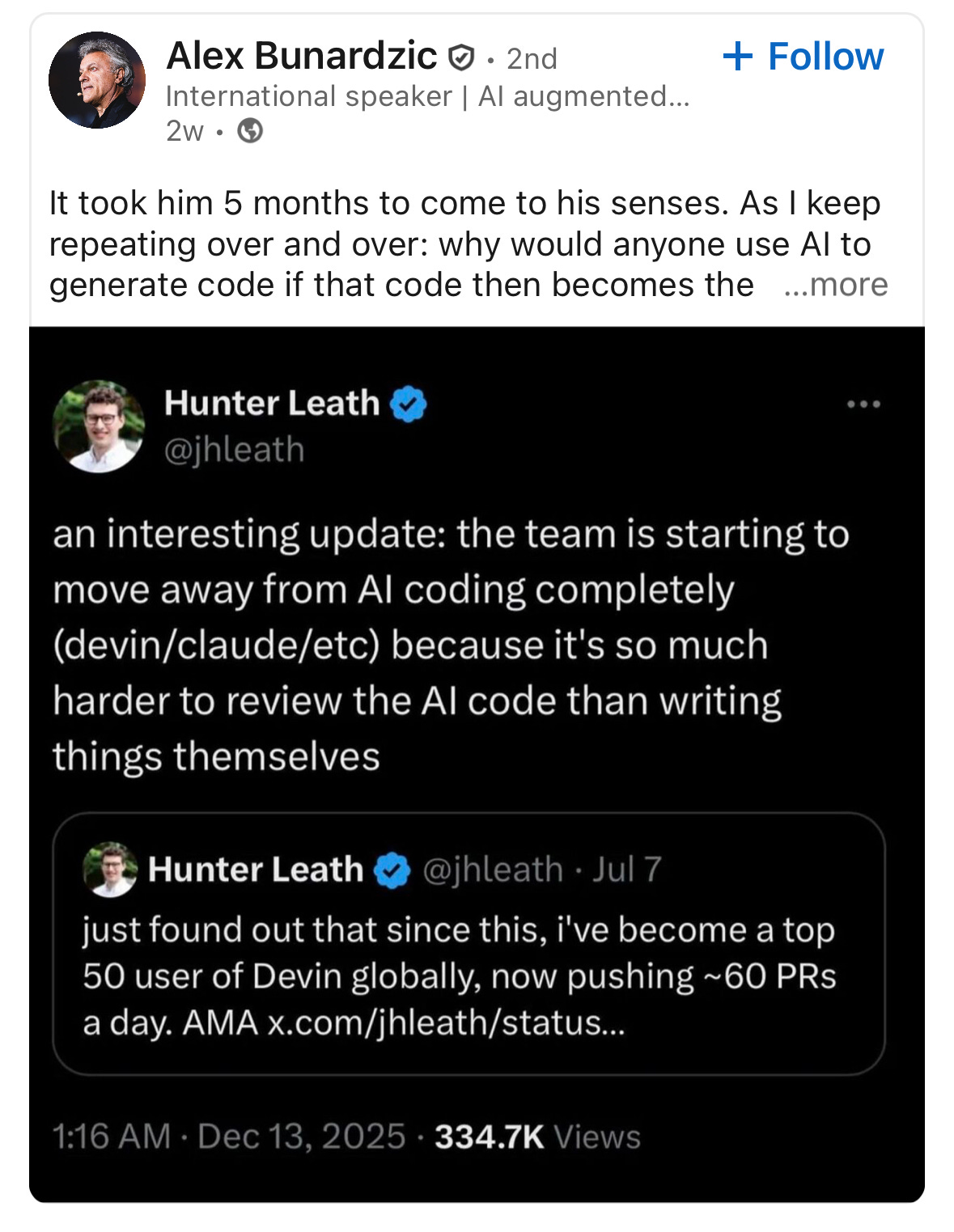
In 2026, the biggest divide in software engineering won’t be senior vs junior, frontend vs backend, or even builders vs managers; it will be AI-native engineers versus AI-resistant engineers. One side will fully embrace AI for speed, leverage, and scale; the other will reject it on principled grounds: security risks, hallucinations, loss of understanding, brittle systems, and the erosion of craftsmanship. This won’t stay a quiet disagreement. Expect increasingly violent debates on social media, public shaming, absolutist takes, and moral posturing on both sides. In parallel, a serious software craftsmanship revival will emerge, defending fully manual, AI-free software production as a mark of quality, trust, and professional integrity. AI won’t “win” this argument cleanly. Instead, software engineering will become a polarised field, where tooling choices signal ideology as much as technical preference.
3 — The battle for the developer interface becomes existential
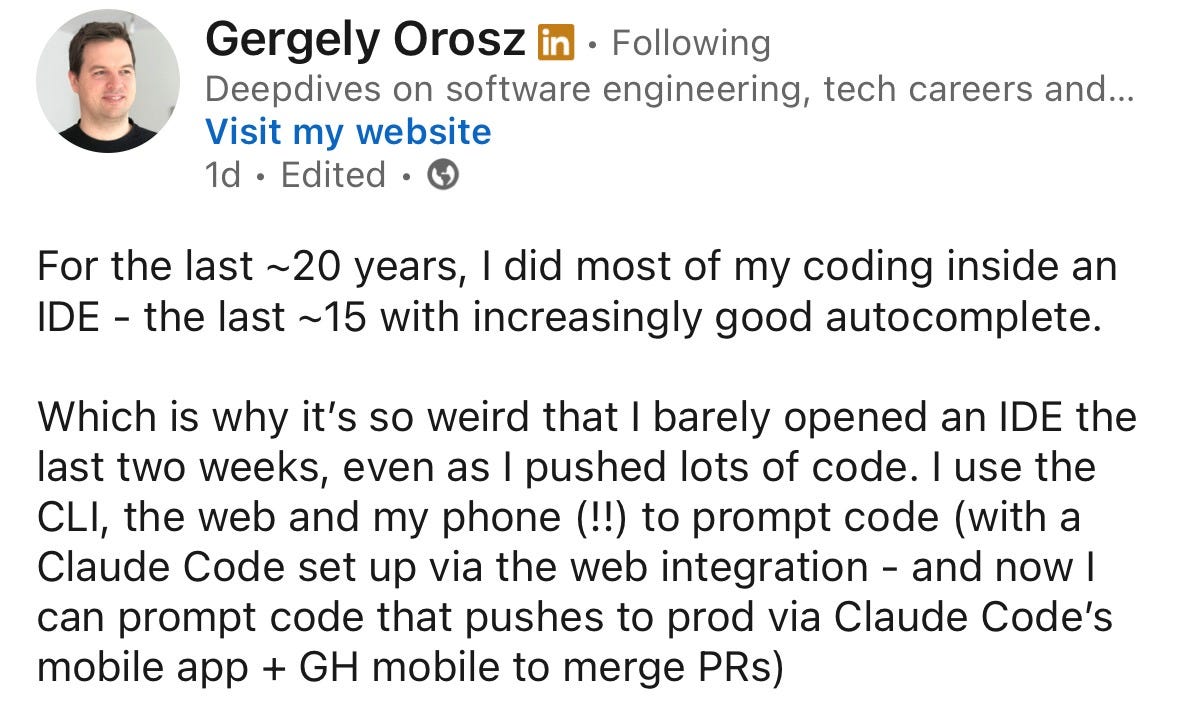
In 2026, the real war in software won’t be about models, it will be about who owns the developer interface. Editors, CLIs, agent runtimes, and AI-native platforms will compete to become the primary control plane for software creation, the place where code is written, reviewed, executed, refactored, deployed, and increasingly decided. Cursor, next-gen IDEs, terminal-first workflows, and agent orchestration layers will all fight for this position, because whoever controls the interface controls distribution, defaults, and ultimately developer behaviour. This will quietly threaten large parts of today’s DevOps and productivity stack: if planning, testing, observability, and remediation happen inside the interface, entire categories risk being absorbed or bypassed. Developers won’t “use tools” anymore, they’ll live inside one environment, and switching costs will skyrocket. The editor is no longer just where you type code; it’s becoming the operating system of software engineering.
4 — Voice becomes the default interface for software and systems
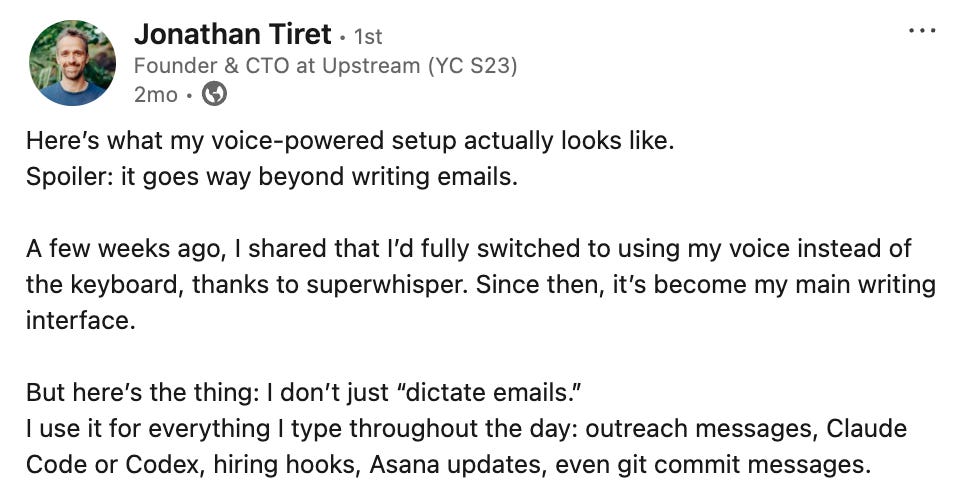
In 2026, voice will stop being treated as a “nice-to-have” UX layer and start behaving like core infrastructure. As agents move from chat windows to real-time systems, typing will increasingly feel like friction. The real breakthroughs won’t be about better voices, but about latency, turn-taking, interruption handling, and reliability at scale. Voice will expose every weakness in today’s AI stacks: slow inference, brittle orchestration, expensive warm environments. Companies that master real-time conversational loops will unlock entirely new interaction patterns, while others will quietly fall back to keyboards and dashboards. This is not a feature race; it’s a structural shift. Just as mobile rewired software around touch, voice will rewire systems around time, flow, and dialogue, and many existing architectures simply won’t survive the transition.
5 — The economics of code flips from creation to continuous maintenance
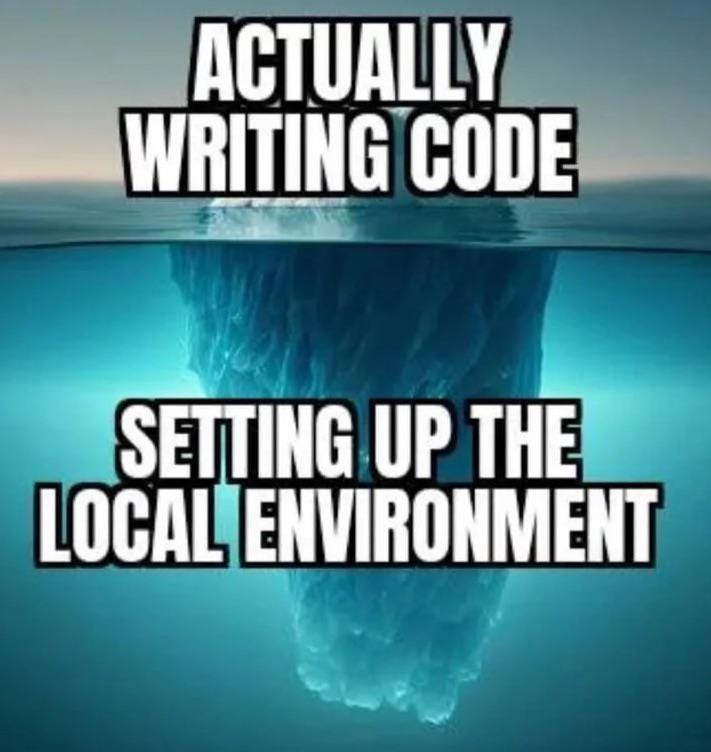
In 2026, the real AI gold rush won’t be about generating new code, it will be about maintaining, refactoring, and continuously evolving the oceans of existing enterprise software. Most large companies don’t suffer from a lack of features; they suffer from brittle legacy systems, undocumented behaviour, tribal knowledge, and change fear. AI will radically lower the cost of touching old code, making refactors, migrations, audits, and incremental rewrites economically viable at scale for the first time. This will turn “maintenance” (long seen as a cost center) into a strategic investment category. Entire new markets will emerge around AI-powered code understanding, large-scale refactoring, compliance-by-design, and perpetual modernisation. Writing new code will increasingly be the easy part; keeping systems alive, safe, and adaptable will become the trillion-dollar problem.
6 — Enterprise AI moves from IT cost line to profit center
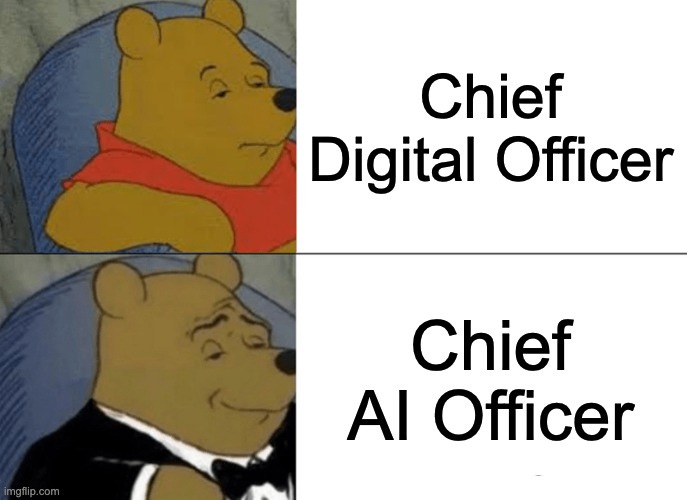
In 2026, AI will decisively escape the CIO’s budget spreadsheet and land on the revenue side of the P&L. Large enterprises will increasingly separate AI-for-productivity (cost reduction, automation, internal tooling) from AI-for-growth (new products, pricing power, customer experience, monetisable capabilities). The former will stay under IT and CIOs; the latter will be owned by Chief AI Officers with explicit revenue targets and board-level accountability. This shift will quietly transform non-tech companies into software builders: banks, insurers, manufacturers, retailers, and logistics players will all start building more AI-native systems in-house because outsourcing innovation will simply be too slow. The result will be more internal software, more infra ownership, and more AI-native business units competing like startups inside incumbents.
7 — The comeback of open-weight and specialised AI models
![Small Language Models (SLMs) [2024 overview] | SuperAnnotate](https://substackcdn.com/image/fetch/$s_!mCIk!,f_auto,q_auto:good,fl_progressive:steep/https%3A%2F%2Fsubstack-post-media.s3.amazonaws.com%2Fpublic%2Fimages%2F4cf54c65-693a-4a1c-a512-966da7e9dad2_1920x1059.webp "Small Language Models (SLMs) [2024 overview] | SuperAnnotate")
In 2026, as enterprises finally move from flashy POCs to real production AI, the gravitational pull will shift away from giant, closed models and back toward control, predictability, and ownership. Infrastructure costs, latency constraints, security audits, and regulatory pressure will make “API-only intelligence” increasingly uncomfortable at scale. As a result, more enterprises will deploy open-weight models they can inspect, fine-tune, and run on their own terms, even if that means sacrificing a bit of raw general intelligence. At the same time, small, highly specialised language models trained for narrow domains like code migration, financial reconciliation, voice turn-taking, or industrial workflows will quietly outperform frontier LLMs on those tasks. The paradox is that the future of enterprise AI will look less like one model to rule them all, and more like a fleet of focused, boring, deeply reliable models embedded everywhere in production systems.
8 — Open-source business models under real pressure
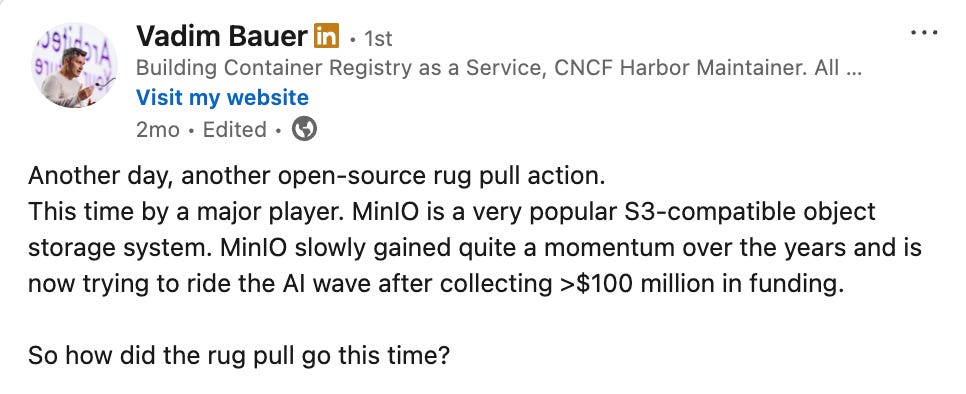
In 2026, open source will remain everywhere, but open-source business models will be under more scrutiny than ever. After years of rug pulls, license changes, and “SSO taxes” that eroded trust, both developers and enterprises will become far more skeptical of OSS vendors that treat openness as a growth hack rather than a long-term contract with their users. The backlash will force a reset. Some companies will double down on aggressive monetisation and lose credibility fast. Others will emerge with more honest, durable COSS strategies, clearer boundaries between open and proprietary, stronger governance, and business models aligned with real enterprise value rather than artificial friction. Open source will not disappear, but naïve open-core stories will. What survives will be open source that is explicit about what is free, what is paid, and why.
9 — AI M&A shifts from models to people and distribution

In 2026, AI M&A will increasingly look less like technology acquisition and more like talent and market access capture. Models will continue to commoditise faster than expected, while teams that know how to ship, deploy, and sell AI at scale will become scarce. Large tech companies will keep paying eye-watering prices not for architectures or weights, but for concentrated groups of builders who have proven they can move fast in production, and for companies that already sit close to users, data, and enterprise workflows. Owning the model will matter less than owning the relationships, the usage, and the credibility. The real premium in AI M&A will be paid for execution leverage, not raw intelligence.
10 — The rise (and limits) of European AI sovereignty
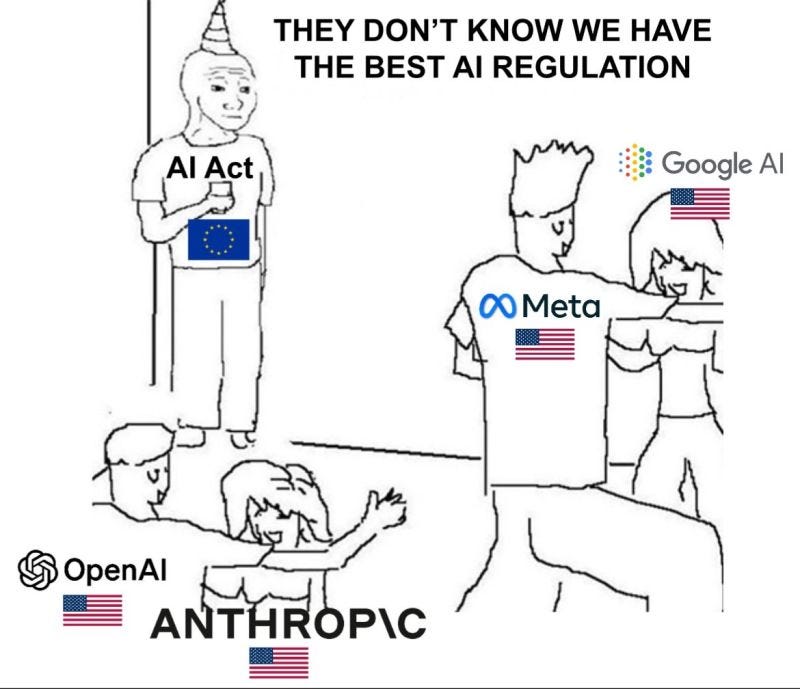
In 2026, European AI sovereignty will move from political slogan to operational reality, but only in clearly defined layers. Europe will prove it can build and operate competitive models, infrastructure, and full vertical AI stacks in regulated and mission-critical domains, especially where control, data locality, and cost predictability matter more than raw scale. At the same time, dependencies will remain unavoidable at the frontier: GPUs, hyperscaler economics, and parts of the foundational model ecosystem will stay globally entangled. Europe’s real win will not be full independence, but selective sovereignty: choosing where control is strategic, where partnerships are acceptable, and where pragmatism beats ideology.
Your prediction about AI-native vs AI-resistant engineers really resonates. I think what's missing from most discussions is the middle ground - engineers who use AI strategically for high-leverage tasks while maintaining deep understanding of fundamentals. The split you describe might actually create a third camp: pragmatists who neither reject AI on principle nor blindly trust it, but rather treat it as another tool in a broader engineering toolkit. The question isn't whether to use AI, but how to use it without creating systems we can't debug or maintain when things inevitably break.