🧑💻 Developer-First #176 - All about Cursor
From coding assistant to autonomous platform: why Cursor may become the Atlassian of the AI era

Hello friend,
Following their $2.3 billion Series D announcement, everyone cannot stop talking about Cursor. But this round is more than another milestone in the AI dev-tools boom; it’s the start of a platform shift. Cursor isn’t just an AI coding assistant; it’s laying the foundations of an agent-centric software delivery lifecycle, where intelligent systems, not humans, drive the development process end-to-end.
If it executes well, Cursor could become the new Atlassian by redefining collaboration itself through autonomous engineering agents that plan, code, review, test, and deploy. Atlassian built a $36.9 billion business on organising human software development workflows; Cursor could build a $10 billion-revenue company by orchestrating AI software development workflows.
The Colossus’ Inside Cursor article released last week (see below) gives a glimpse of that future: a company that’s already operating like a post-human software organisation. The question isn’t whether developers will adopt AI coding assistants (they already have), but how fast they’ll retool their entire engineering stack around them. Cursor might not just disrupt Atlassian. It might become big enough to acquire it.
P.S. If you’re a CTO, VP Engineering, or technical executive, you should join the Unicorn CTO community, a network of European tech leaders who learn and connect with peers. You’ll get access to exclusive events and a private Slack group where the top engineering leaders in Europe exchange strategies every week.
Deal of the Week — Cursor raises $2.3B Series D
Cursor just announced a $2.3 billion Series D at a $29.3 billion post-money valuation. The AI-native development environment, used by millions of developers, has also reached over $1 billion in annualised revenue.
This round isn’t just another massive AI raise, it’s a signal that AI-native software development environments are becoming the new center of gravity in engineering. Cursor is no longer an “AI code editor”; it’s positioning itself as the primary interface where humans, models, and agents collaborate to build software at scale.
💭 My take: LLMs were supposed to kill the application layer, but the opposite is happening: companies who wrap models in workflow, UX, guardrails, and deep product insight. And the “GPT wrappers” like Cursor are now worth billions. Read more about this deal here. Also, you’ll find all the other transactions from last week in The Changelog at the end of this newsletter.
AI coding assistants are becoming the default
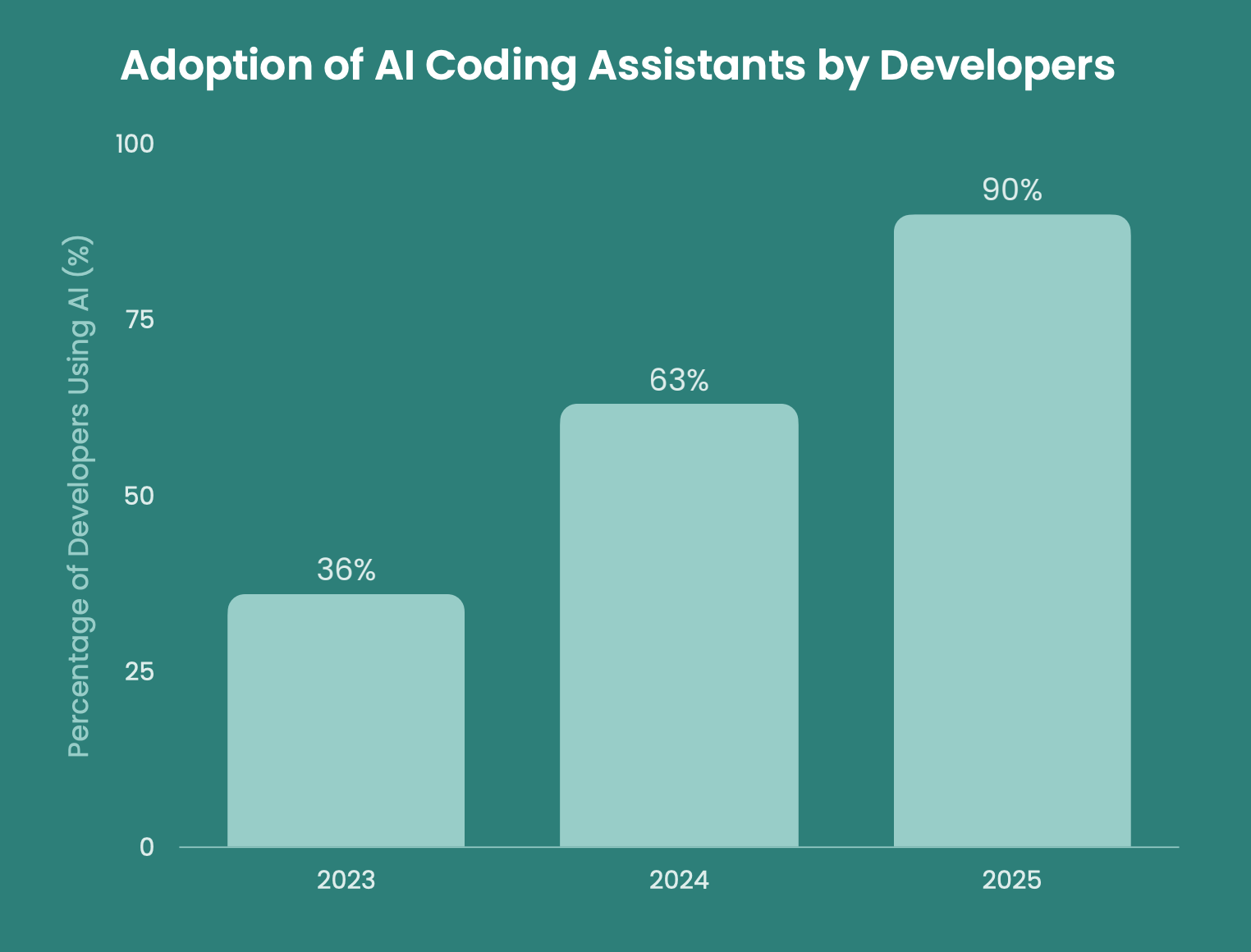
Venture Capital firm Accel released last week its 2025 Globalscape report, and one slide particularly resonated with me: AI coding assistants have crossed the adoption chasm. Developer usage jumped from 36% in 2023 to 90% in 2025. At this level of penetration, AI assistants are no longer “tools”, they’re new systems of record for engineering work. Developers now expect instant answers, instant scaffolding, and agent-grade support baked directly into their editor.
This macro trend explains why Cursor crossed $1 billion ARR, less than two years after its founding. If 90% of developers now use AI in their editor, then the editor itself becomes strategic infrastructure, the new command center where coding, orchestration, and agent collaboration converge. And if that center shifts, it could completely overhaul the software delivery lifecycle as we know it, to the point where giants like Atlassian could find entire product lines obsolete overnight, despite their current M&A spree.
Inside Cursor: how a generational infra company actually operates
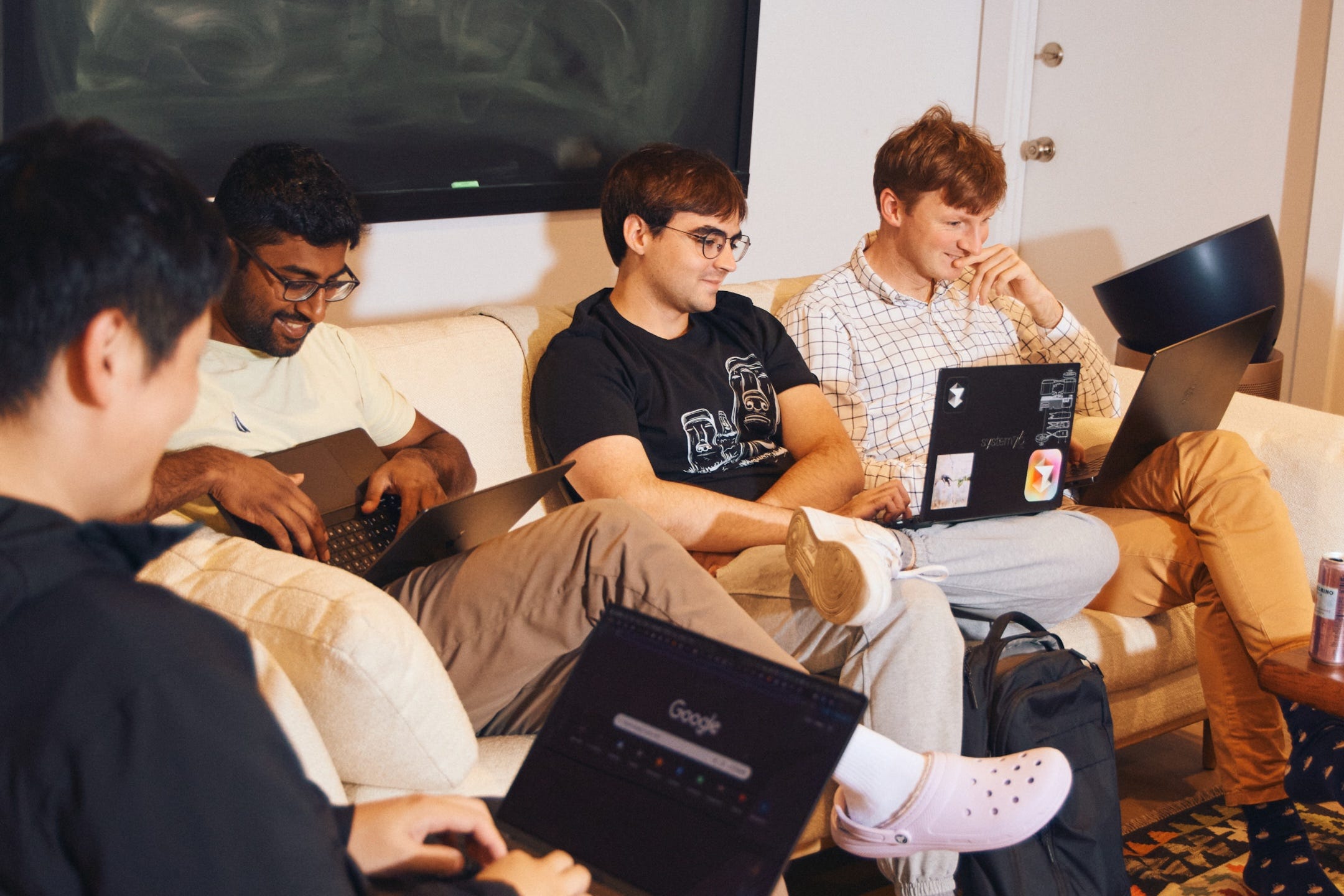
It’s no coincidence that Brie Wolfson’s “Inside Cursor” piece on Colossus dropped in the same week Cursor announced its $2.3B Series D, as the article reads like an x-ray of why the company was able to reach Decacorn velocity so fast. At Cursor, the culture is intensely in-person (86% SF/NY), built around chalkboards, deep work, and six-days-a-week communal lunches where most conversations are about product and ideas, not vibes. It’s also rigorously IC-driven: 50+ former founders, very few meetings, high autonomy, and a default assumption that the best way to change something is to grab it and ship.
The bar is unapologetically high (hard interviews, willing to accept false negatives), and the product explicitly optimises for the best professional engineers. Cursor is obsessed with “raising the ceiling,” not “lowering the floor.” Combined with a culture of constructive friction (micro-pessimist, macro-optimist) and an almost total lack of “exit / comp” talk, you get a company where the mission is the prize: turning code generation into the fabric of how the world is built.
The Changelog - Week of November 10th, 2025
Last week, 8 companies raised $2.5 billion across 3 product categories in 4 countries. Europe-based companies attracted less than 1% of the total funding vs 97% for North America-based companies and another 3% for Asia-based companies (incl. Israel). None of these companies distribute or contribute to an open-source project. On the M&A side, one company was acquired.
Funding Rounds
Anysphere, from San Francisco 🇺🇸 raised $2.3 billion in Series D funding. Anysphere is the company behind Cursor, the AI-powered code editor designed to make developers extraordinarily productive. (more)
Parallel Web Systems, from Palo Alto 🇺🇸 raised $100 million in Series A funding co-led by Kleiner Perkins and Index Ventures. Parallel Web Systems is building a new web for AIs, developing APIs that enable intelligent agents to crawl, index, and reason over web data. (more)
Majestic Labs, from Tel Aviv 🇮🇱 raised $71 million in Series A funding led by Bow Wave Capital. Majestic Labs is reimagining AI infrastructure by combining massive compute with 1000× the memory to deliver unprecedented performance and efficiency. (more)
Code Metal, from Boston 🇺🇸 raised $36.5 million in Series A funding led by Accel. Code Metal develops AI-powered development workflows for the edge, enabling verifiable and automated code translation for secure, high-performance systems. (more)
Deductive AI, from Mountain View 🇺🇸 raised $7.5 million in Seed funding led by Charles River Ventures. Deductive AI builds self-healing software systems through code-aware observability that automates root-cause detection across distributed systems. (more)
Spectral Compute, from London 🇬🇧 raised $6 million in Seed funding led by Costanoa Ventures. Spectral Compute develops SCALE, a compiler toolkit that lets engineers run CUDA-based code seamlessly across different hardware platforms without rewriting it. (more)
Frugal, from Ottawa 🇨🇦 raised $5 million in Seed funding led by Whitecap Venture Partners. Frugal offers an AI-native cost engineering platform that automatically reduces cloud spend by identifying and fixing inefficient code patterns. (more)
Mesa, from San Francisco 🇺🇸 raised $5 million in Seed funding. Mesa provides an AI-driven platform to review, debug, and optimise enterprise software collaboratively across large engineering teams. (more)
M&A Transactions
liblab, from Seattle 🇺🇸 was acquired by Postman. liblab auto-generates SDKs for APIs in seconds, helping developers simplify integration workflows and improve developer experience. (more)